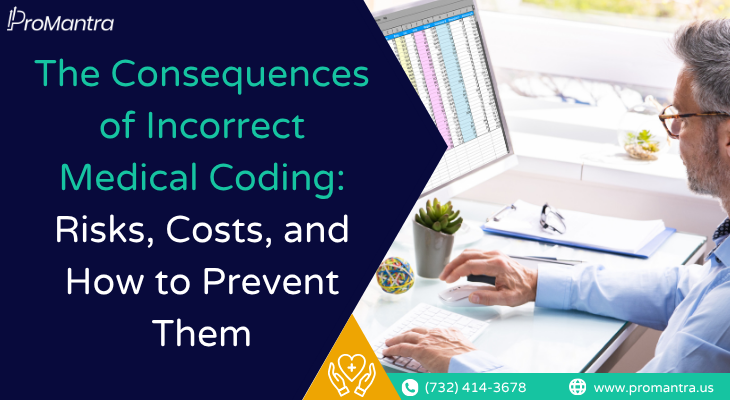
Accurate and efficient medical coding keeps healthcare operations running and ensures providers get paid correctly for the care they deliver. Medical coding services translate complex procedures, diagnoses, and treatments into standardized codes that insurers, regulators, and other providers all rely on. When that translation goes wrong, even in a small way, the consequences of incorrect medical coding rarely stay small. A single mismatched code can ripple outward into denied claims, compliance exposure, and disrupted patient care, often long after the original coding error was made.
Why Medical Coding Accuracy Matters in the First Place
Medical coding sits at the intersection of clinical documentation, billing, and regulatory compliance. When it’s done well, it does three things at once: it lets medical billing teams generate accurate, submittable claims, it keeps a practice’s revenue cycle moving without unnecessary friction, and it creates a reliable record of what care was actually delivered. Coding accuracy isn’t a back-office detail that only matters to specialists; it’s the layer that everything downstream, from reimbursement to audit readiness, actually depends on.
The Consequences of Incorrect Medical Coding
When coding goes wrong, the effects tend to show up in several places at once, not just on a single denied claim.
1. Revenue loss. Inaccurate or incomplete codes lead directly to claim denials and underpayments. According to industry benchmarks from the Medical Group Management Association, average claim denial rates run in the mid-single to low-double digits, and a significant share of denied claims are never resubmitted at all, which turns a temporary delay into permanent lost revenue. Each individual denial also costs real money to rework, with industry estimates for the administrative cost of reworking a single denied claim ranging widely depending on complexity, on top of the reimbursement itself.
2. Compliance and legal exposure. Incorrect coding can trigger allegations of fraud or abuse, even when the error was unintentional. Coding regulations under ICD and CPT frameworks are strict, and a pattern of inaccurate codes, particularly ones that consistently favor higher reimbursement, can draw the attention of payers and regulators alike. The legal and financial consequences of a compliance investigation extend well beyond the cost of the original claim.
3. Patient care disruption. Incorrect codes can distort the documented record of a patient’s diagnoses, procedures, and treatments. That can delay authorization for necessary care, create confusion during care transitions between providers, or result in a patient being denied insurance coverage for a procedure that was, in reality, medically necessary. Coding accuracy is ultimately a patient safety issue as much as a financial one.
4. Increased audit risk. Coding errors, especially recurring ones, raise flags during routine payer and regulatory audits. A practice with a visible pattern of inaccurate coding tends to face more frequent and more intensive audits going forward, which consumes staff time and administrative resources that could otherwise go toward patient care.
5. Damaged trust and reputation. Patients who receive incorrect bills, unexpected denials, or confusing statements as a result of coding errors lose confidence in a practice, sometimes permanently. Referring providers and partners notice too. Reputational damage from recurring billing problems is harder to quantify than a denied claim, but it compounds in ways that show up in patient retention and referral patterns over time.
6. Administrative burden and staff strain. Every incorrect code that leads to a denial creates rework: identifying the error, correcting the documentation, resubmitting the claim, and often appealing a decision that shouldn’t have been necessary in the first place. This work falls on billing and coding staff who are frequently already stretched thin, and it pulls their attention away from getting new claims out the door correctly the first time.
How to Catch These Consequences Before They Compound
The good news is that none of these consequences are inevitable. Most trace back to a small number of preventable root causes, which is exactly the territory covered in avoiding common medical billing and coding errors: incomplete documentation, outdated code sets, and rushed reviews under time pressure. Building a habit of structured revenue integrity audits catches drift while it’s still small, rather than after a payer or regulator has already flagged a pattern. For teams that want a more systematic approach to staying current, our guide to medical coding compliance covers how to keep pace with changing guidelines without relying on ad hoc training alone.
How Outsourcing Reduces These Specific Risks
Outsourcing medical coding to an experienced partner addresses several of the consequences above directly, rather than as a generic efficiency play.
Against revenue loss: a dedicated coding team with deep familiarity across specialties tends to catch the specificity and documentation gaps that most directly cause denials, since this is the entire focus of their work rather than one responsibility among many.
Against compliance exposure: an experienced partner stays current with ICD and CPT updates as a core part of the job, reducing the risk of a practice falling behind on rule changes it didn’t have the bandwidth to track internally.
Against audit risk: outsourcing partners that build in regular internal quality checks catch the kind of recurring errors that would otherwise surface during a payer or regulatory audit, addressing the pattern before it becomes visible externally.
Against administrative strain: shifting coding work to a team built around it, rather than a generalist in-house group juggling multiple responsibilities, reduces the rework cycle that consumes staff time after a denial.
At ProMantra, our certified coders work specifically to prevent the consequences outlined above rather than simply processing volume. That includes staying current with coding guideline updates, running internal accuracy checks before claims go out, and working closely with denial management to resolve and learn from the denials that do occur. Practices considering outsourcing don’t need to take on every function at once; even addressing the single highest-risk area, whether that’s a specific denial pattern or an upcoming audit, is often enough to see a meaningful reduction in these consequences.
Frequently Asked Questions
What happens if medical coding is done incorrectly? Incorrect medical coding can lead to claim denials and revenue loss, compliance and legal exposure, disrupted patient care, increased audit scrutiny, damaged patient trust, and added administrative burden for billing and coding staff.
How much does a coding error actually cost a practice? Beyond the value of the claim itself, every denied claim requires staff time to identify, correct, and resubmit, and a meaningful share of denied claims are never resubmitted at all, turning a fixable error into permanent lost revenue.
Can incorrect coding lead to a compliance investigation? Yes. A pattern of inaccurate codes, particularly ones that consistently result in higher reimbursement, can draw scrutiny from payers and regulators, even when the underlying error wasn’t intentional.
Does outsourcing medical coding actually reduce these risks? It can, particularly for practices without the internal bandwidth to track coding guideline updates, run regular accuracy audits, or dedicate staff time to denial follow-up. The impact depends on choosing a partner with clear reporting and specialty-specific coding experience.
Protect Your Practice From These Consequences
The consequences of incorrect medical coding compound quickly once they start, but every one of them is preventable with the right coding process in place. Whether you need a full review of your current coding accuracy or support with a single high-risk area like denial follow-up, our team can walk through what that would look like for your practice. Contact Us today to learn more about our medical coding services.